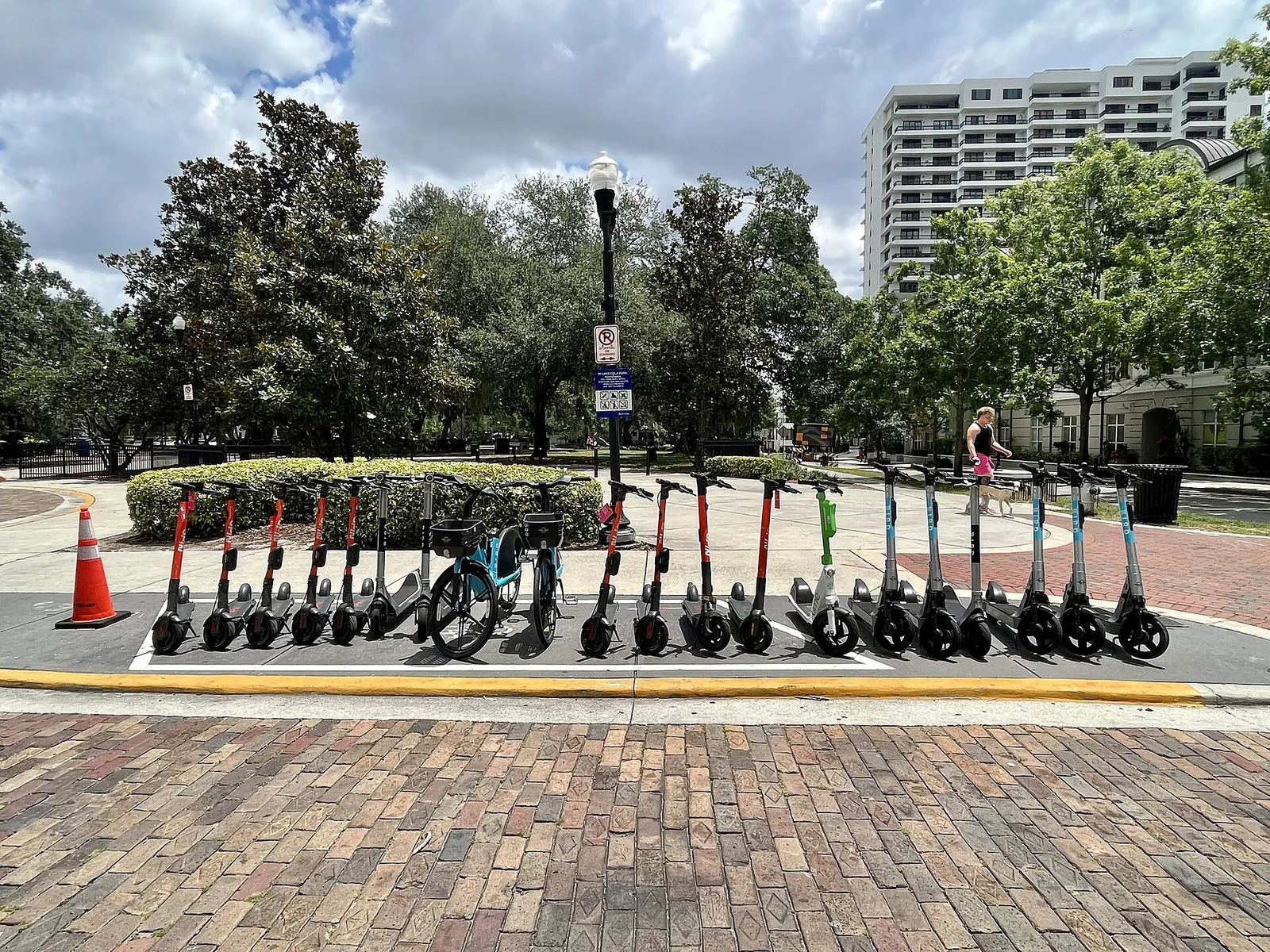
Orange County's new e-bike and scooter law: 10 mph on sidewalks, 20 mph on roads, no stunts, parking rules and fines. What riders and parents need to know.
E-bike and electric scooter riders in Orange County now face a 10 mph limit on sidewalks and a 20 mph limit on roads. Breaking the rules can bring a citation or the loss of the device to impound.
The Orange County Board of County Commissioners adopted the micromobility ordinance Sept. 29. The county set out what it means for riders in a newsroom post on Oct. 28.
Legal e-bikes and e-scooters may use roads, sidewalks, paths and trails in Orange County, the county said. That holds unless a city has posted signs or set its own rules. Riders inside Orlando city limits should watch for city signs.
Speed limits
The limits apply to privately owned e-bikes, electric scooters and similar devices, where they are allowed:
| Where | Top speed |
|---|---|
| Sidewalks, shared-use and multi-use paths | 10 mph |
| Roads, road shoulders, bike lanes, bike paths and trails | 20 mph |
Lower limits or other restrictions may apply where posted, the county said.
Riding rules
Under the ordinance, riders must:
- yield to pedestrians on sidewalks and in crosswalks
- give an audible warning before passing someone
- ride carefully and follow traffic laws
The ordinance bans reckless riding, stunt riding and street takeovers. Riders also may not tow another person or device, or do wheelies, jumps or other stunts that put people or property at risk.
Parking rules
E-bikes and scooters must be parked upright or locked to a bike rack or other approved parking. They may not block:
- sidewalks or crosswalks
- wheelchair ramps
- driveways
- transit stops
- building entrances or emergency access points
Riders also may not lock them to fences, benches, signposts or trees. The county may remove a device left on public property for more than seven days in a row.
E-bike or e-moto?
The ordinance treats more powerful electric motorcycles, sometimes called e-motos, differently from e-bikes. E-motos are banned from sidewalks, bike lanes, shared-use paths and trails, the county said. They may use roads only when the rider and the vehicle meet state licensing, registration and insurance rules.
Younger riders
The ordinance applies to minors too. Florida law already requires riders and passengers under 16 to wear a properly fitted bicycle helmet, the county noted.
For a minor’s first violation, parents or guardians get a written notice. After that, they may be responsible for penalties and costs, including impound fees.
Penalties
Violations are noncriminal civil infractions that may lead to a citation, the county said. Officers may impound a device for some violations, including speeding or dangerous riding. For breaches of state law, such as helmet, lighting and audible-signal rules, officers may also write a Uniform Traffic Citation. The county’s post did not list fine amounts.
What it means for you
- On a sidewalk or multi-use path, keep to 10 mph and give way to people walking.
- On the road or in a bike lane, the top speed is 20 mph.
- Park upright and out of the way, or the county may take the device after seven days.
- If your teenager rides, a first offense brings a letter home. Later ones can cost you.
- If it is really an e-moto, it needs a license, registration and insurance, and it stays off sidewalks and trails.
The county ties the ordinance to its Vision Zero Action Plan, which aims to end traffic deaths. For places to ride, see our guide to Orlando walking and biking trails. For other road news, see getting around Orlando and our story on the city’s new school zone speed cameras.
Have your say