Orlando grew from Fort Gatlin (1838) and Jernigan, took its name in 1857 and was incorporated in 1875 with 85 people. Its 22 National Register listings.
Last checked Oct. 9, 2026. The town’s story comes from the City of Orlando’s history page. National Register listings and years come from the National Park Service’s National Register database, version of May 22, 2026. Museum hours are as each museum publishes them.
Orlando’s story begins in 1838, when the U.S. Army built Fort Gatlin during the Seminole Wars, south of today’s city limits. A settlement called Jernigan, after the family that made the first permanent home in the area, grew up around it. The community took the name Orlando in the 1850s, and the Town of Orlando was incorporated in 1875 with 85 inhabitants, the city says. Questions about city landmarks go to the City Planning Division’s historic preservation staff at 407-246-2269.
Key dates
- 1838: Fort Gatlin built
- 1840: a community, Jernigan, has grown up around the fort
- May 30, 1850: Jernigan post office established
- 1857: the U.S. Post Office adopts the name Orlando
- 1875: Town of Orlando incorporated, 85 inhabitants, 22 of them qualified voters
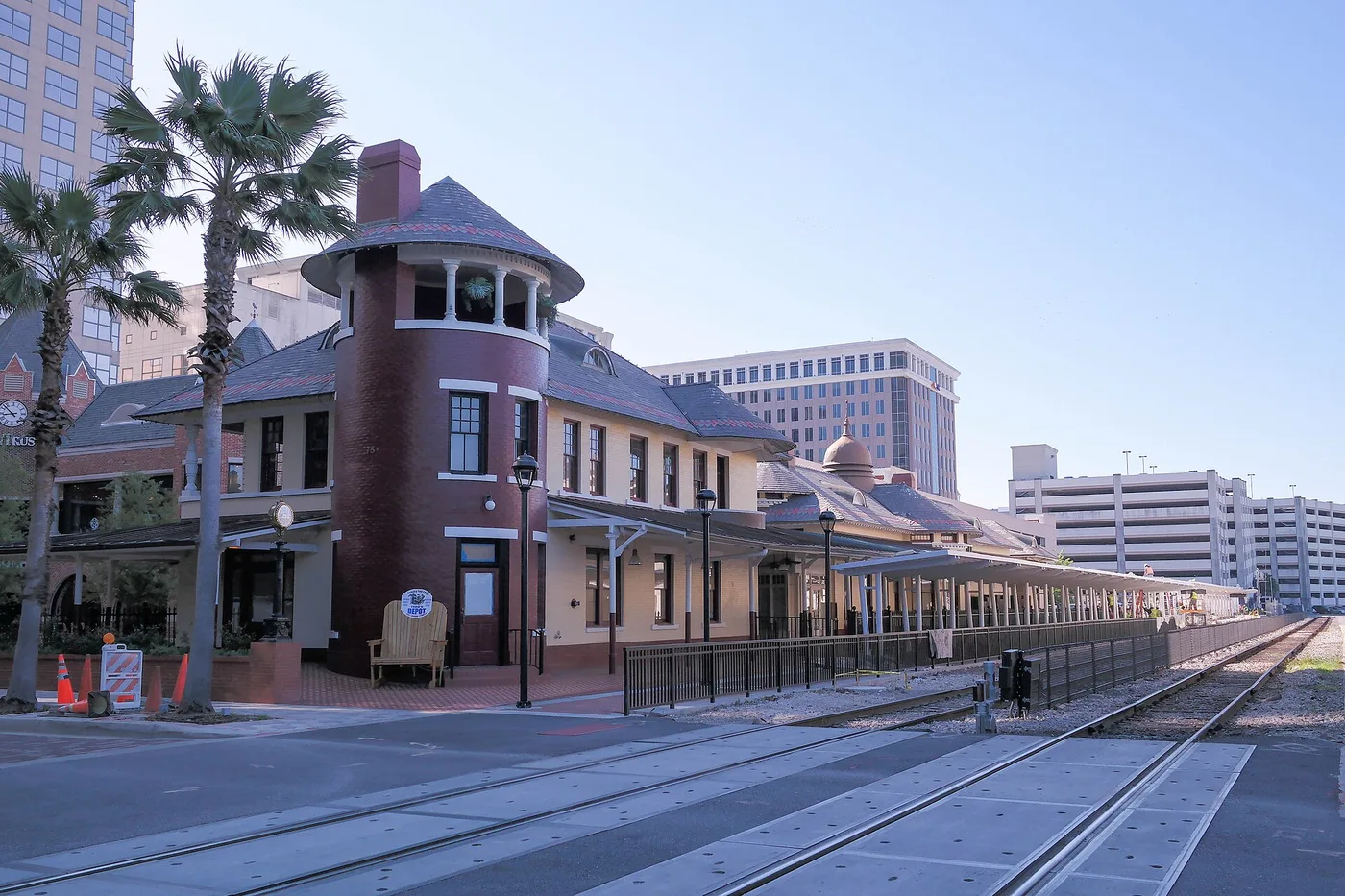
- 1976: first Orlando listing on the National Register, the Old Orlando Railroad Depot
From Jernigan to Orlando
By 1840 a small community had grown up around Fort Gatlin. Jernigan got a post office on May 30, 1850. Six years later, with the settlement spreading north, it officially changed its name to Orlando, and the U.S. Post Office adopted the change in 1857. The town was incorporated in 1875.
Where the name came from is not clear, the city says, and it tells four stories:
- Judge James Speer, who worked to make Orlando the county seat, named it after a man who once worked for him.
- Speer named it for a character in Shakespeare’s As You Like It.
- A traveler named Orlando, heading to Tampa with an ox caravan, fell ill, died and was buried here; passers-by would say, “There lies Orlando.”
- Orlando Reeves, a sentinel guarding a Seminole Wars camp near Lake Minnie, now Lake Cherokee, was killed raising the alarm and buried on the south side of Lake Eola.
The city describes Orlando’s economy moving from the hub of Florida’s citrus industry in the 19th century to tourism in the 20th, and now toward digital media, life sciences and simulation.
National Register of Historic Places
The National Park Service lists 22 National Register properties with an Orlando address, including nine historic districts:
| Listed | Property | Location |
|---|---|---|
| 1976 | Old Orlando Railroad Depot | Depot Place and West Church Street |
| 1979 | Dr. P. Phillips House | 135 Lucerne Circle NE |
| 1980 | First Church of Christ, Scientist | 24 N. Rosalind Ave. |
| 1980 | Tinker Building | 16-18 W. Pine St. |
| 1983 | Rogers Building | 37-39 S. Magnolia Ave. |
| 1984 | J.J. Bridges House | 704 S. Kuhl Ave. |
| 1992 | Lake Eola Heights Historic District | Hillcrest Street, North Hyer Avenue, Ridgewood Street and North Magnolia Avenue |
| 1993 | John N. Huttig Estate | 435 Peachtree Road |
| 1994 | Mizell-Leu House Historic District | 1730 N. Forest Ave. |
| 1996 | Griffin Park Historic District | Avondale and South Division avenues, Carter Street and I-4 |
| 2000 | Wells’Built Hotel | 511 W. South St. |
| 2004 | Tinker Field | 1610 W. Church St. |
| 2009 | S. Howard Atha House | 1101 W. Princeton St. |
| 2009 | Holden-Parramore Historic District | West Church Street, South Division Avenue, Long Street, McFall Avenue and South Parramore Avenue |
| 2009 | Rosemere Historic District | East Harvard Street, North Orange Avenue, Cornell Avenue and East Vanderbilt Street |
| 2010 | Lake Ivanhoe Historic Residential District | Orlando Street, I-4, Lakeview Street and Edgewater Drive |
| 2011 | Lake Adair-Lake Concord Historic District | Golfview Street, Edgewater Court, Alameda Street and Peachtree Road |
| 2012 | Orlando Utilities Commission Administration Building | 500 S. Orange St. (as the register lists it) |
| 2013 | Jack Kerouac House | 1418 Clouser Ave. |
| 2019 | Lake Lawsona Historic District | South and Robinson streets, Summerlin and Hampton avenues |
| 2022 | Baptist Terrace Apartments | 414 E. Pine St. |
| 2022 | Atlantic Coast Line Station | 1400 Sligh Blvd. |
District boundaries are approximate, as the register describes them. Most of these are private homes or working buildings; view them from the street. The city also designates its own local landmarks and historic districts through its historic preservation program.
Places you can visit
- Old Orlando Railroad Depot, Church Street Station, listed 1976. The depot stands beside the tracks downtown and can be seen from the street.
- Mizell-Leu House at Harry P. Leu Gardens, 1920 N. Forest Ave. The gardens are open 9 a.m. to 5 p.m. daily, closed Dec. 25, the city says; see leugardens.org.
- Dickson Azalea Park, 100 Rosearden Drive, a city park since 1924, with the Washington Street Bridge of 1926. Sunrise to sunset.
- Big Tree Park, 930 N. Thornton Ave., home of what the city calls Orlando’s oldest tree, likely 350 to 400 years old.
- Orlando Museum of Art, 2416 N. Mills Ave., Loch Haven Park. 10 a.m. to 4 p.m. Tuesday to Friday, noon to 4 p.m. Saturday and Sunday, closed Mondays and holidays, per omart.org.
- Mennello Museum of American Art, 900 E. Princeton St. 10:30 a.m. to 4:30 p.m. Tuesday to Saturday, noon to 4:30 p.m. Sunday, closed Mondays, per its visitor page.
- Orange County Regional History Center, the county’s history museum; check thehistorycenter.org for hours and admission.
Florida’s historical markers in Orlando are searchable on the state’s Florida Historical Markers Program site.
What this means for you
- Walk Lake Eola Heights or Lake Lawsona for a self-guided look at historic homes.
- Watch the city’s video on the Eppes family by City of Orlando Sexton Don Price for more of the early story.
- Our parks guide covers Leu Gardens, Loch Haven and Dickson Azalea Park.
Frequently asked questions
When was Orlando founded?
Its history begins with Fort Gatlin, built by the U.S. Army in 1838 during the Seminole Wars. The settlement around it, Jernigan, took the name Orlando in the 1850s, and the Town of Orlando was incorporated in 1875 with 85 residents, the city says.
How did Orlando get its name?
No one is sure. The city tells four stories, including a soldier named Orlando Reeves killed near Lake Eola during the Seminole Wars and a Shakespeare character from As You Like It.
How many National Register of Historic Places listings are in Orlando?
22, including nine historic districts, according to the National Park Service’s database of May 22, 2026. The first, the Old Orlando Railroad Depot, was listed in 1976.
What was Orlando’s first post office called?
Jernigan. The Jernigan post office opened May 30, 1850, and the U.S. Post Office adopted the name Orlando in 1857, the city says.
Have your say